Does CLAUDE.md actually help?
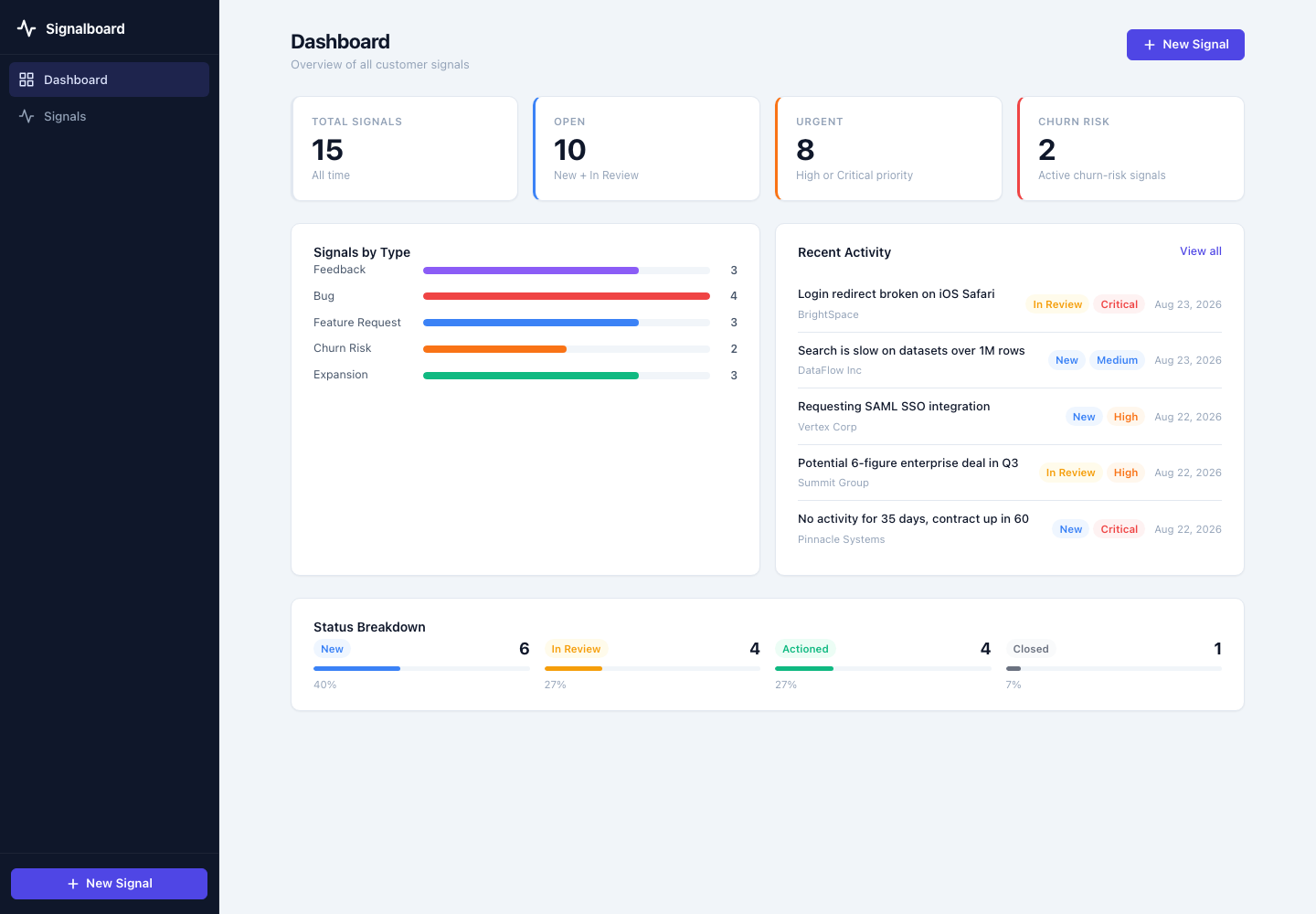
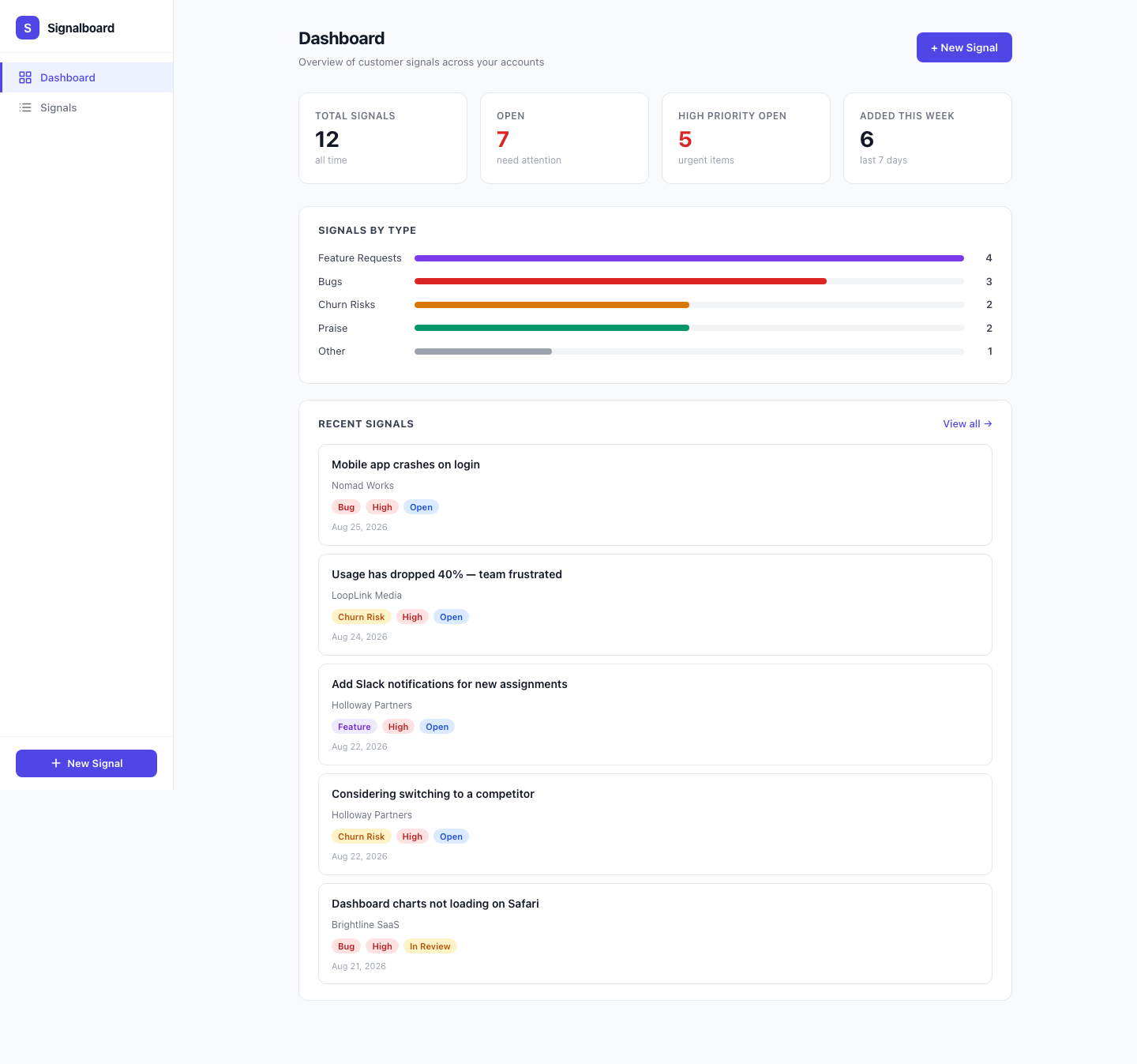
We ran the same Signalboard prompt twice from the same starting commit and the same model — once with no CLAUDE.md, once with a root CLAUDE.md file. Here is what came back both times.
What happened
Both conditions passed the same 10 deterministic checks and failed the same 7, out of 17 total. CLAUDE.md produced no measured improvement on this deterministic score in this single controlled run. The two applications look different — different sidebar treatment, different layout choices — but the grader could not tell them apart on outcome.
What this tells us
This is not evidence that CLAUDE.md never helps. It is one paired run, on one task, under one grader. What changed between the two runs is recorded below, not attributed — a single paired run cannot establish that CLAUDE.md caused the duration or token differences either.
What changed
One run per condition cannot attribute these to CLAUDE.md. They are recorded, not explained.
| Metric | Without CLAUDE.md | With CLAUDE.md |
|---|---|---|
| Deterministic checks passed | 10/17 | 10/17 |
| Agent duration | 478.8 seconds | 409.2 seconds |
| Output tokens | 33,769 | 30,142 |
Duration dropped 69.6s and output tokens dropped 3,627 in the CLAUDE.md run; the checks passed and failed did not change.
Without CLAUDE.md · 7 failed
customer_signal_records_existcreate_signal_worksderived_summary_statistic_updateslocal_persistence_survives_reloadedit_signal_workssearch_or_filter_worksdelete_signal_works
With CLAUDE.md · 7 failed
customer_signal_records_existcreate_signal_worksderived_summary_statistic_updateslocal_persistence_survives_reloadedit_signal_workssearch_or_filter_worksdelete_signal_works
The task
Read the exact prompt (770 characters, sent once per run)
Both runs used prompt SHA-256 139c5d30e5f71c11fc50594fea951423e1e86e5e1ef7ffbb1147d91919c57825 and started from commit dea92b54f8e10b629887361513c4384b92b82b7c.
Build a responsive SaaS-style Next.js application called Signalboard.

Signalboard is a simple workspace for tracking customer signals and feedback.

Requirements:

* Next.js
* TypeScript
* responsive desktop and mobile UI
* navigation
* dashboard
* list of customer-signal records
* create a new signal
* edit an existing signal
* delete a signal
* search or filter signals
* display at least one useful summary statistic derived from the current records
* local or mock persistence sufficient for the application to function
* accessible controls
* successful production build
* no material browser console errors
* do not use paid external APIs
* do not require production authentication

Do not ask questions.

Make reasonable product and design decisions yourself.
Evidence & setup
Held constant vs. changed
- Task
- Identical prompt bytes
- Starting state
- dea92b54f8e10b629887361513c4384b92b82b7c
- Configured model
- claude-sonnet-4-6
- Only difference
- A root CLAUDE.md file
Per-check comparison · 17 checks
| Deterministic check | Without CLAUDE.md | With CLAUDE.md |
|---|---|---|
| Production Build Success | PASS | PASS |
| Typescript Success | PASS | PASS |
| Page Loads | PASS | PASS |
| Signalboard Product Identity | PASS | PASS |
| Navigation And Dashboard Exist | PASS | PASS |
| Customer Signal Records Exist | FAIL | FAIL |
| Accessible Controls | PASS | PASS |
| Desktop Renders | PASS | PASS |
| Create Signal Works | FAIL | FAIL |
| Derived Summary Statistic Updates | FAIL | FAIL |
| Local Persistence Survives Reload | FAIL | FAIL |
| Edit Signal Works | FAIL | FAIL |
| Search Or Filter Works | FAIL | FAIL |
| Delete Signal Works | FAIL | FAIL |
| Mobile No Material Horizontal Overflow | PASS | PASS |
| Mobile Renders | PASS | PASS |
| No Material Browser Console Errors | PASS | PASS |
The exact CLAUDE.md
The complete treatment file, verbatim. This is the only declared difference between the two launches.
# Signalboard implementation guidance

- Follow the existing Next.js and TypeScript project conventions.
- Keep the architecture and dependencies simple; prefer a direct, maintainable implementation over unnecessary abstraction.
- Build a coherent responsive workspace experience for desktop and mobile.
- Use semantic HTML, labelled controls, visible focus states, and keyboard-usable interactions.
- Keep records and derived dashboard summaries in one consistent state model, with local persistence where appropriate.
- Before finishing, run the available typecheck and production build commands and resolve any failures.
Models, settings, and usage
Methodology
Two fresh nonresumed Claude Code executions began from the same fixture commit and received identical prompt bytes, exact model configuration, execution settings, and deterministic grader. Condition A is the one baseline capability run. Condition B is non-baseline; its only intended treatment variable was the preserved root CLAUDE.md.
Documented limitations · 4
- This is one task with one execution per condition; observed differences cannot establish general or statistically reliable effects.
- The deterministic grader tests specified functionality and structural accessibility heuristics, not overall visual quality or every valid implementation pattern.
- Configured model identity and CLI-exposed runtime model identity are recorded separately; multiple runtime model identifiers, if exposed, are preserved without inventing a primary model.
- Both processes ran under the same macOS user without OS-level filesystem isolation, although worktrees were sequential and no sibling workspace or run evidence path was supplied.
See the head-to-head next. See Claude vs Codex →